Conversion
Home Valuation Lead Capture: How to Convert Seller Traffic
How a valuation request turns quiet seller research into a conversation: the flow, the expectation problem that loses most leads, and why follow-up takes years.
Introduction
Buyers browse in public. They open listings, save homes, come back three times a week, and leave a trail you can read.
Sellers do almost none of that. Someone thinking about listing next spring is not browsing your inventory — they are quietly wondering what their own home is worth, and they will do that wondering on whatever site answers the question.
The valuation request is the one moment that thought becomes visible. It is the highest-value single form on a real estate website, and it is the one most often set up in a way that loses the person.
⚡ Quick answer — how should a website capture seller leads? With a valuation request that is honest about what it delivers. A homeowner trades their contact details for an answer, so the answer has to arrive in the form they were led to expect. Promise an instant number and deliver a phone call, and you have lost them at the first step. Get the address entry right, be specific about what happens next, and plan for a follow-up measured in months.
Why the seller signal is worth more
Three reasons a valuation request outweighs a buyer enquiry.
It is rarer. Buyer enquiries arrive constantly. Seller signals are scarce and most sites capture none.
The transaction is on your side of the table. A listing is inventory, and inventory generates buyer leads. One seller can produce several.
It arrives before the competition. Someone requesting a valuation is often a year out — well before they interview agents. Nobody else is talking to them yet.
That last point also explains why these leads get mishandled. They look cold. They are not cold; they are early, which is different and much better.
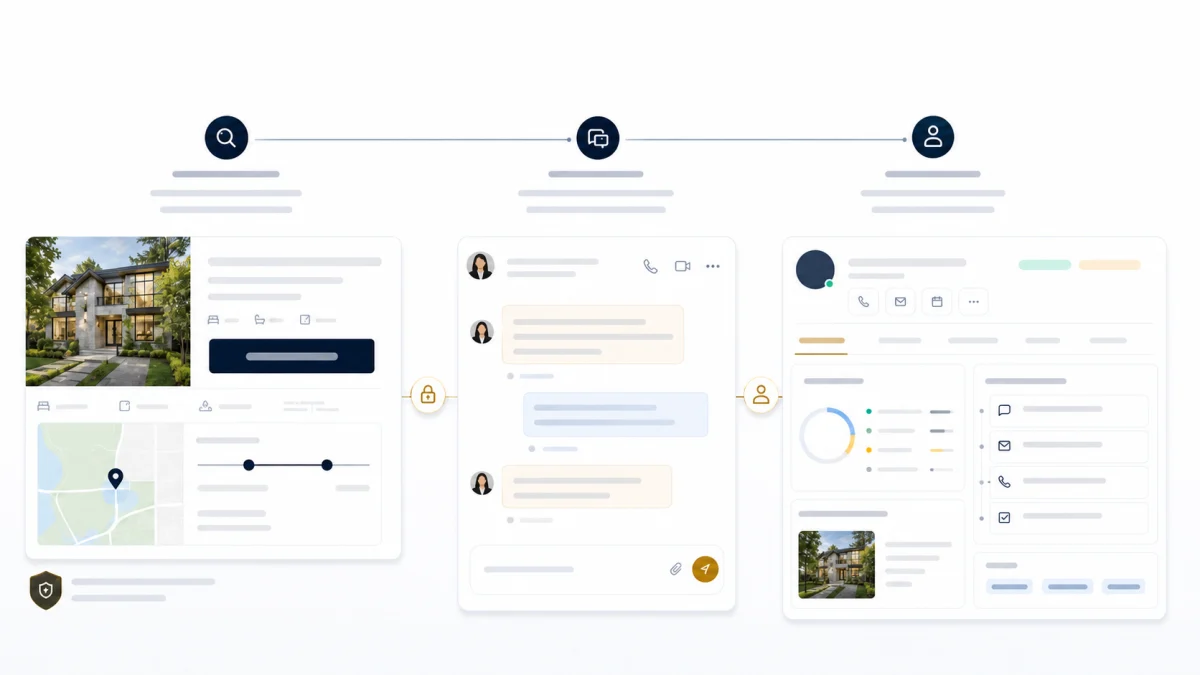
The flow
- 1
Homeowner wonders what it's worth
HomeownerNot ready to say they are selling — often a year out
- 2
They enter their address
HomeownerThe friction point. A broken autocomplete loses them here
- 3
They give contact details
HomeownerThey are trading contact for an answer — so be clear which answer
- 4
The request reaches the agent
SystemA lead record, with any browsing history attached
- 5
A person prepares the valuation
YouComparables, condition, local knowledge — this step is human
- 6
The conversation
YouDeliver it, ask why they are asking, agree what happens next
- 7
Long follow-up
YouSellers move on their own timeline. Logged notes, not pressure
The platform captures the request. It does not produce the valuation. Step five is a person doing comparables — nothing here is an automated valuation model, and promising a number while delivering a call is the fastest way to lose a seller.
Three of these deserve attention.
Address entry is the whole funnel
More valuation forms are lost at address entry than anywhere else, and it is entirely a mechanical problem.
A homeowner typing their own address into a field that does not autocomplete, rejects their unit number, or cannot find a newer street simply leaves. They are not motivated enough to fight it — they were idly curious ninety seconds ago.
Autocomplete matters more here than anywhere else on the site. It is the difference between a completed request and an abandoned one, and unlike most conversion advice it is a settable, one-off fix.
Ask for as little else as possible. Address, then contact. Not year built, not renovations, not "tell us about your property" — you can ask all of that in the conversation, and every field before the submit button costs you people.
The expectation problem
This is the one that quietly kills these leads, and it is a copy problem rather than a technology problem.
Some sites deliver an instant algorithmic estimate. Some deliver an agent's assessment within a day. Both are legitimate. Promising the first and delivering the second is not.
A homeowner who was told they would see a number, and instead receives a form confirmation and a phone call the next morning, feels baited. They will take the call, be short with you, and not call back. You have converted a warm early seller into someone who has decided how you operate.
Say what they will get, in the form:
"Enter your address and we'll send you a valuation prepared by a local agent — usually within one business day, based on recent comparable sales in your area."
Longer than "Get your free instant home value!" and dramatically better, because everyone who submits it wants the thing you actually provide.
The valuation itself is human work
Comparables, condition, local knowledge, and the things about the property that no dataset holds.
That is worth being clear about with the homeowner too. An agent's assessment is more defensible than an automated estimate, and framing it that way turns the slower delivery into the selling point it actually is.
The follow-up runs in years
The most common failure after capture: treating a valuation request as a ready-to-list seller.
Someone asking what their home is worth might be selling in three months, refinancing, settling an estate, curious after a neighbour sold, or nine months from a decision they have not made. Approaching all of them as though they are listing next week loses the ones who are not.
Ask why. In the first conversation. "Is this something you're considering soon, or getting a sense of the market?" The answer determines everything that follows, and most agents never ask it.
Match the cadence to the answer. Someone eighteen months out does not want monthly contact. They want to hear from you when something relevant happens on their street.
Log what they told you. "Waiting until their daughter finishes school in June." Six months later, that note is the entire reason your follow-up lands rather than reads as a template.
Give them a reason to hear from you. A comparable sale nearby. A change in local inventory. Something specific to their property, not a newsletter.
This is exactly the kind of long, low-frequency relationship that a CRM exists for and a memory does not — see the CRM guide.
Placement
The valuation request is not a homepage-only feature.
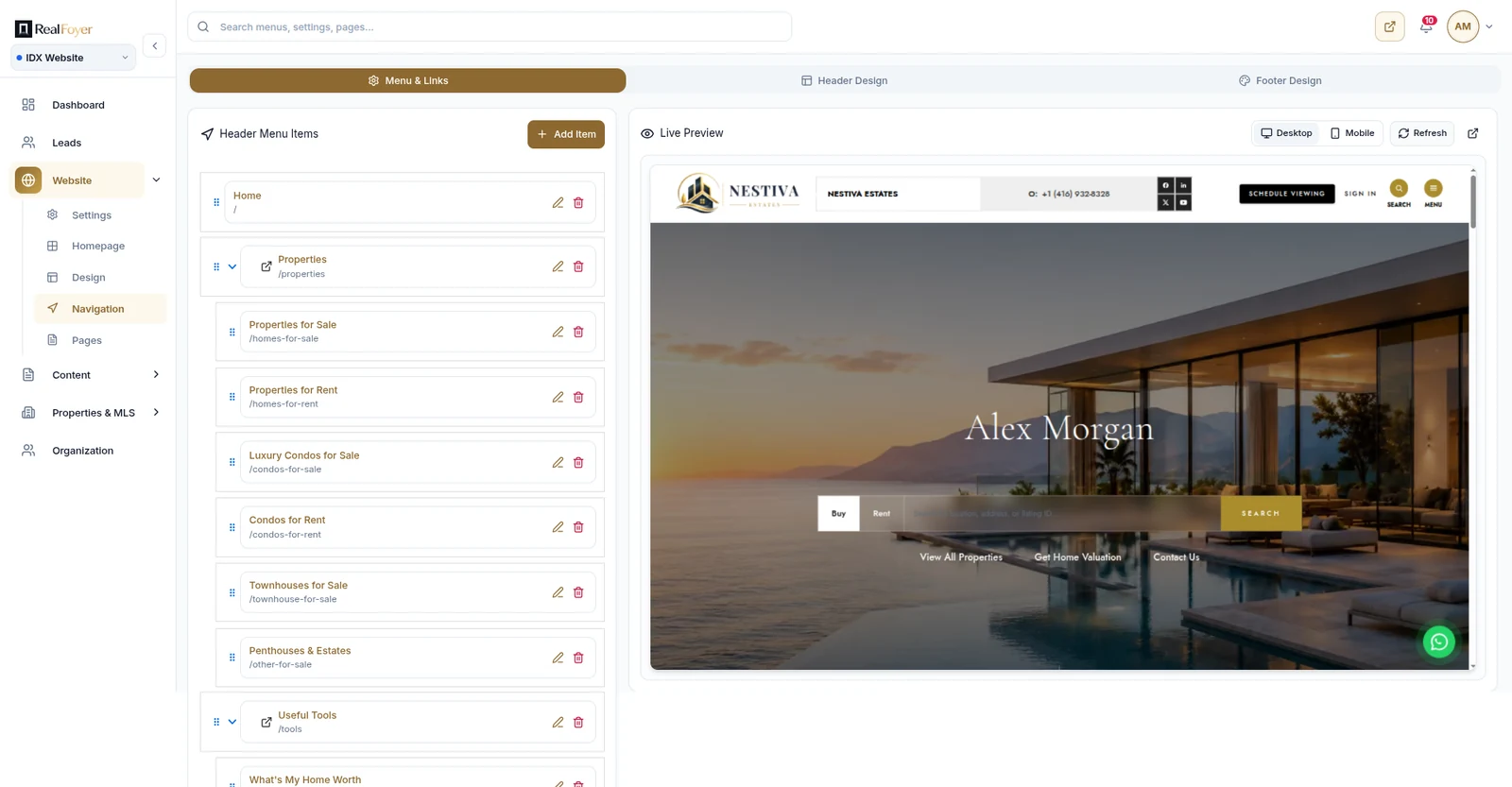
A dedicated page that can rank for "what is my home worth in [area]" — a real page with local market context, not just a form.
On area pages, contextually. Someone reading about their own neighbourhood is a plausible seller, and it is a more natural moment than any banner.
On sold-listing content. Someone who just looked at what the house down the street sold for is the most qualified seller prospect on your site.
Not as an interstitial. A popup demanding an address before anyone has seen anything performs the way you would expect.
What to measure
Requests per month, absolute. The base number.
Address-entry completion rate. How many start the form versus finish it. If there is a large gap, your address field is the problem — and it is fixable this week.
Conversations held. Requests where you actually spoke to the person.
Listings, eventually. The lagging indicator, and the only one that matters. It will lag by many months, which means judging this channel quarterly will always understate it.
Do not judge valuation capture on a monthly conversion rate. The mechanism runs on a seller's timeline, not a reporting period.
Where RealFoyer fits, and where it stops
RealFoyer captures valuation requests. There is an address-autocomplete request form, and the request arrives as a lead record in the CRM alongside any browsing history that person has on your site — which is genuinely useful context, because a homeowner who has also been viewing listings is likely buying as well as selling.
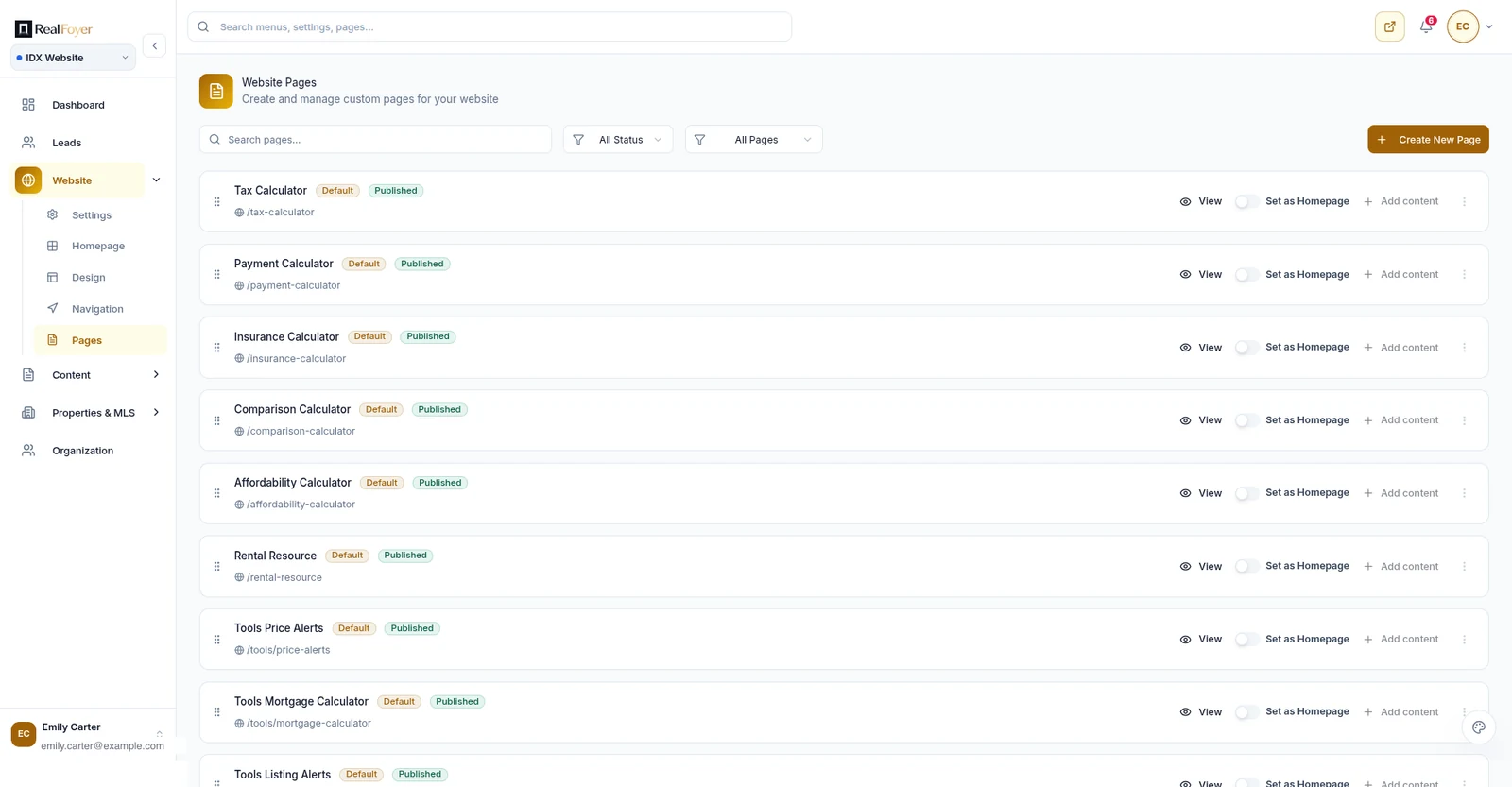
From there it behaves like any other lead: notes, logged calls, stages, appointments, and a timeline that still makes sense in eight months.
Two boundaries, stated plainly.
RealFoyer does not produce an automated valuation. There is no AVM, no algorithmic estimate and no accuracy claim — the capability is request capture, and the valuation is work you do. If your form implies otherwise, your form is writing a cheque the platform will not cash.
Automated seller-nurture sequences can keep valuation leads engaged across a long decision cycle, schedule useful follow-ups and bring the assigned agent in when a personal conversation is needed.
FAQ
Should I offer an instant estimate or an agent assessment? Whichever you can actually deliver. An instant estimate captures more requests and sets up a comparison against a number you did not calculate; an agent assessment captures fewer, better-qualified people. The only wrong answer is promising one and delivering the other.
How much should I ask for on the form? Address and contact details. Everything else is a conversation.
What if my estimate is wrong? Any estimate carries a range, and saying so protects you. A homeowner told "between X and Y, depending on condition" is being treated as an adult.
Do valuation leads convert? On a long timeline. Judged monthly they look poor; judged over a year they are frequently the best source of listings a website produces.
Should I gate the result behind contact details? That is the trade, and it is a reasonable one — but say so before they start, not after they have typed their address.
How often should I follow up? Set by what they told you, and by whether you have something worth saying. Quarterly with something specific beats monthly with nothing.
In short
The valuation request is the only reliable way a website surfaces a seller, and it is usually surfaced early — a year before they interview anyone.
Get the address field right, be exact about what they will receive, ask why they are asking, and follow up on their timeline with something specific. The platform's job is to capture the request and keep the history; the valuation and the relationship are yours.
Explore RealFoyer home valuation capture — an address-autocomplete request form whose enquiries arrive in the CRM with the sender's property activity attached.
Related reading
- Real Estate Website Conversion
- Saved Searches vs Contact Forms
- Real Estate CRM: How to Actually Use One
- Speed to Lead in Real Estate
Research Integrity
Published 16 August 2026 and corrected 23 August 2026. RealFoyer captures valuation requests into CRM lead records and can run automated seller-nurture sequences across the longer decision cycle. It does not itself produce an automated property valuation or make an estimate-accuracy claim. No unsourced conversion statistics are used.