Neighborhood
How Many Neighborhood Pages Should a Real Estate Website Have?
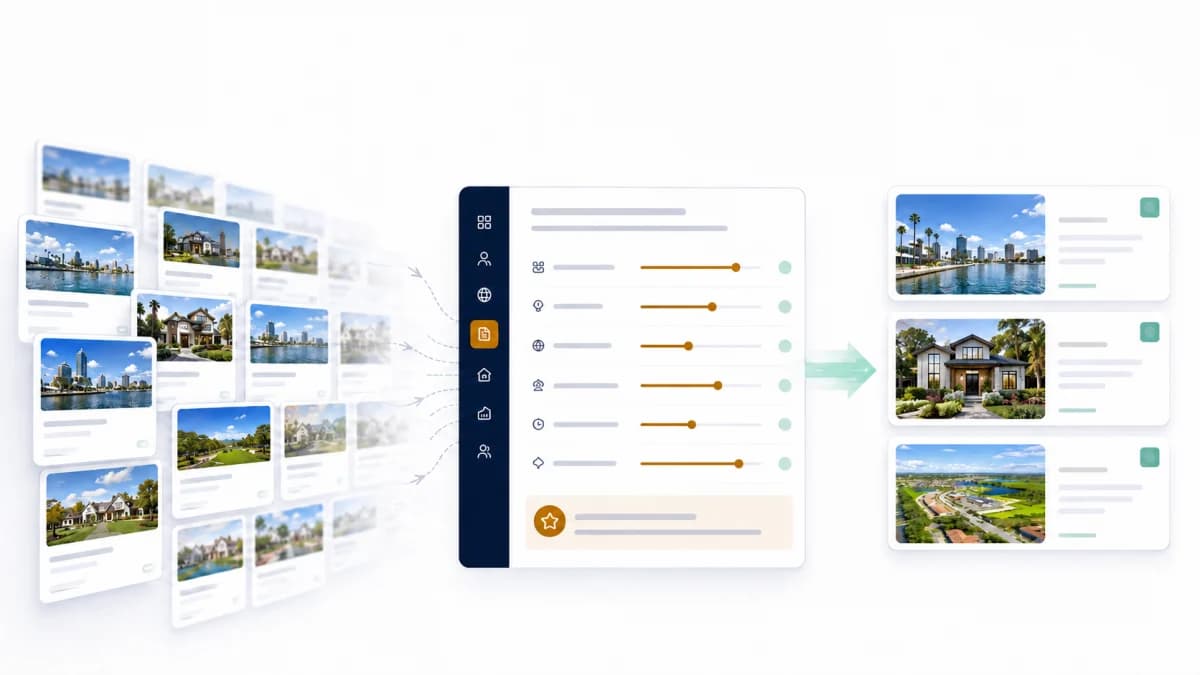
The six tests an area must pass to earn a page: a name residents recognise, a real boundary, inventory, demand, knowledge you have and capacity to maintain it.
Introduction
The usual answer is "as many as you can." It is wrong, and it is the reason a lot of real estate sites carry two hundred pages that do nothing.
The honest answer is that each page has to earn its place, and the number that qualifies is smaller than the number of areas you serve — often much smaller. This article is about where the line falls.
⚡ Quick answer — how many neighbourhood pages should you build? As many as pass six tests: residents use the name, you can draw the boundary, there is inventory, someone searches for it, you know something about it nobody else does, and you can keep it current. For most individual agents that is somewhere between five and fifteen. A dozen pages built this way will outperform two hundred generated ones, and they will not put the rest of the site at risk.
Why more is not better
Three reasons, in ascending order of how much they cost you.
Each page needs to be worth landing on. A visitor who arrives on a page assembled from adjectives and a listing count learns that your site is not useful. That is a conversion cost you never see.
Thin pages can affect how the rest of the site is assessed. This is the one that surprises people. A large volume of low-value pages is a signal about the site, not only about those pages. Adding weak pages can make your good ones harder to surface.
Every page is a maintenance liability. A page with a 2023 median price on it in 2026 is actively worse than no page. Two hundred pages is two hundred things to keep current, and nobody does.
The six tests
- 1
Do residents use this name?
Yes — It is a place people say and search
No — You invented the grouping for coverage — no page
- 2
Can you draw its boundary?
Yes — You know where it starts and stops, roughly as residents do
No — A postcode is not a boundary — no page
- 3
Is there inventory?
Yes — Listings appear here often enough that the page is not usually empty
No — A page with no homes on it converts nobody — no page
- 4
Does anyone search for it?
Yes — The name appears in enquiries, conversations or search data
No — No demand — fold it into the parent page instead
- 5
Do you know something nobody else does?
Yes — You can write three facts that required being there
No — This is the gate that matters most — no page
- 6
Can you keep it current?
Yes — You will refresh the figures and revisit it when the area changes
No — A page you cannot maintain becomes a liability — no page
All six, or no page. The question is whether this area justifies a page worth reading — not whether another keyword URL can be generated.
1. Do residents use the name?
If people who live there say it unprompted — "we're in Leslieville" — it is a place. If you assembled it from a map or a keyword tool, it is not.
Invented groupings fail twice: nobody searches the term, and the page describes an area that does not exist as anyone experiences it.
2. Can you draw the boundary?
Roughly as residents would. Ask five people where it ends and you will get a consistent answer with fuzzy edges — that consistent answer is the page.
A postcode is not a boundary. Postcodes are mail-routing shapes that routinely split communities and bundle unrelated ones. Build on them and your listing block will show homes nobody local would call part of the area.
3. Is there inventory?
Listings need to appear here often enough that the page is not usually empty.
An area with two sales a year produces a page that is empty most of the time. That is a poor experience, and it removes the block that makes the page commercially useful.
For genuinely low-inventory areas the better move is a section on the parent page — you keep the content, lose the empty shell.
4. Does anyone search for it?
You do not need a keyword tool for this. Better evidence is closer to hand: does the name come up in enquiries? Do clients say it? Does it appear in your own site search?
Keyword volume tools under-report hyper-local terms badly — low reported volume for a real neighbourhood name is common and not disqualifying. Local evidence beats the tool here.
5. Do you know something nobody else does?
The gate that matters most, and the one that disqualifies the most areas.
Can you write three facts about this place that required being there? What the main street is like at 8am. Which building completed last spring and what it did to inventory. Why one side trades at a premium to the other despite looking identical on a map.
If you cannot, the page will be assembled from data — and a portal has more data than you do. This test is the whole argument for the page existing.
The test before publishing: remove the place name. Could this page be about anywhere else?
6. Can you keep it current?
The gate people skip, and it is a real constraint rather than a counsel of perfection.
If you quote figures, they need refreshing. If the area changes, the page needs revisiting. Multiply by the number of pages and be honest about the total.
A dozen pages you maintain beats fifty you abandon — and abandoned pages do not stay neutral, they decay into liabilities.
Where the doorway-page line actually is
Worth stating precisely, because the usual advice is vague in both directions.
Google's guidance describes doorway pages as pages created primarily to rank for search variations, funnelling users to the same destination without offering distinct value.
What that does not mean: that location pages are inherently a problem. They plainly are not — they are among the most useful pages a local business can publish, and the guidance is not a prohibition on having one page per place.
What it does mean: the mass-generated area page — same paragraphs, place name substituted, listing count injected — meets the description whether or not anyone intended it to.
The distinction is not length, and it is not whether you used a template for the layout. It is whether the page contains something specific to that place. A 400-word page with three facts nobody else has is a real page. A 1,200-word page assembled from adjectives is not, however carefully written.
That is the same test as gate five, arriving from a different direction — which is a reasonable sign it is the right test.
Realistic numbers
Not rules, just what the tests usually produce.
A solo agent typically passes five to fifteen. You cannot know thirty areas well enough for gate five, and pretending otherwise produces the pages that hurt.
A team can extend that if different members genuinely cover different areas and each writes their own. The constraint is knowledge, so distributing the knowledge distributes the constraint.
A brokerage with multiple offices can justify more, again because different people actually know different markets. What does not work is one marketing person writing two hundred pages centrally.
A new agent should start with two or three. Publish those properly, see what happens, add more. Starting with forty is how you end up with forty pages you cannot maintain and no evidence about which were worth it.
Building in order
Sequence matters more than the total.
Start with the area you know best — the one you could talk about for twenty minutes without preparation. Write it properly.
Then the next-best. Keep going in descending order of how well you know each place. You will feel where quality drops off, and that point is your number, better identified than predicted.
Let the data tell you where to go next. After a few months, Search Console shows which pages get impressions and which queries you surface for. Some pages will surprise you. Extend from evidence rather than from your original list. The 90-day plan sequences this.
What to do with the areas that fail
Failing a gate does not mean ignoring the area.
Fold it into the parent. A section on the city or community page, with the same local detail. You keep the knowledge and avoid the thin page.
Group genuinely related areas. Two adjacent small areas people mentally treat as one can be one page — if residents would recognise the pairing.
Wait. Inventory changes, areas develop, your knowledge grows. A gate-three failure today may pass next year.
Revisit annually. Both directions: some areas become page-worthy, and some existing pages should be consolidated.
Auditing what you already have
If you inherited a site with a hundred area pages, run the six gates over them.
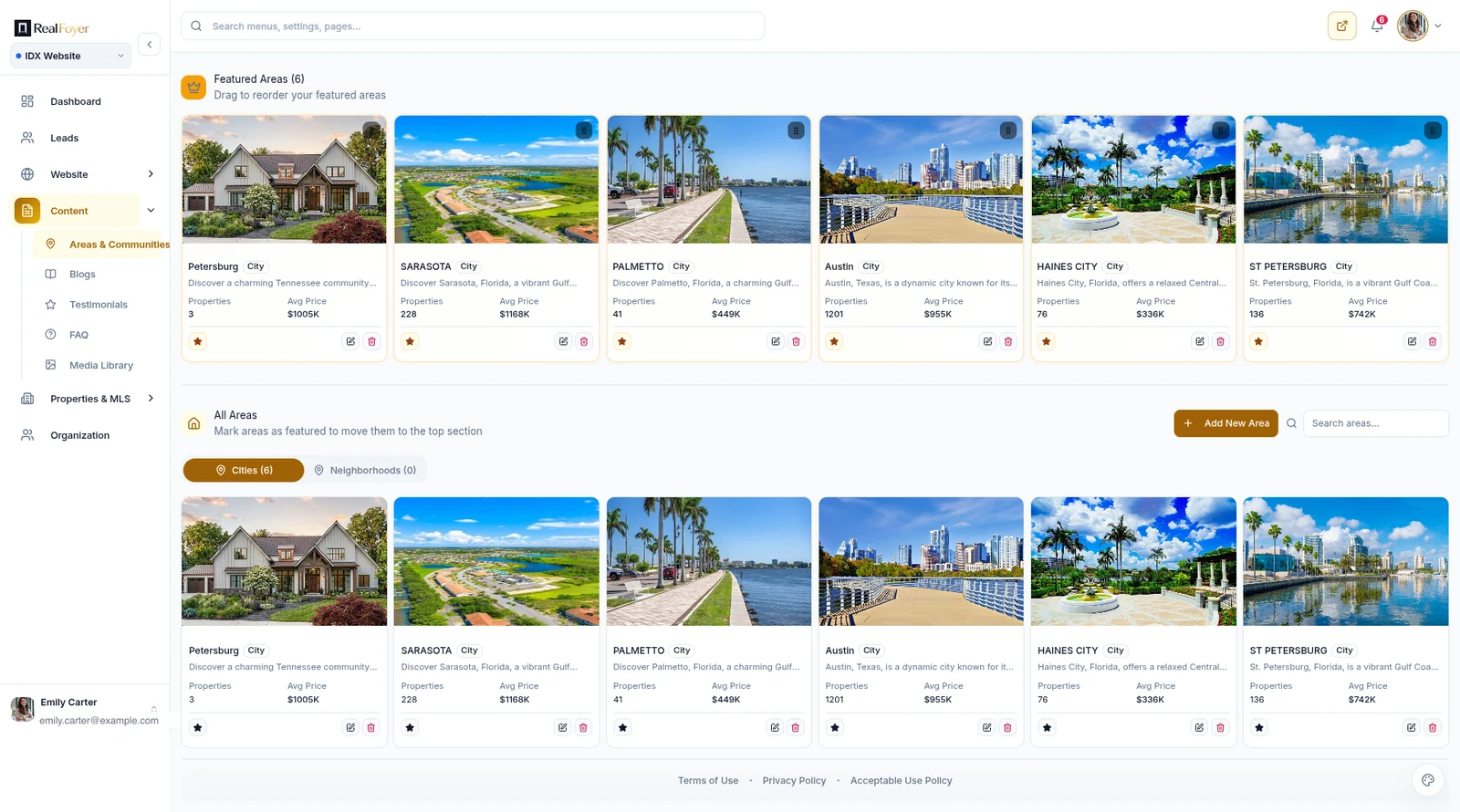
Sort into three piles. Keep and improve — passes all six, may need refreshing. Consolidate — real content, but the area is better served as part of a parent page. Remove — generated, thin, describes nowhere in particular.
Removing pages feels like going backwards and usually is not. The site gets easier to crawl, the good pages get more internal link equity, and the overall signal improves.
Redirect what you remove to the most relevant parent page rather than deleting outright.
FAQ
Is there a minimum word count? No. Four hundred specific words beat twelve hundred general ones. Distinctiveness is the factor, not length.
Should I build pages for areas I want to work in but don't yet? No — you will fail gate five. Build them when you know them.
What if a competitor has 300 area pages? Look at ten of them. They are almost certainly generated. Volume is easy to copy and presence is not; that asymmetry is your advantage.
Can AI write these? For structure and editing, usefully. For the presence detail that makes the page rank, no — a model has not been to the intersection either. It will produce fluent text containing nothing a portal does not already have.
How often should I add pages? When you have something to say about a new area, not on a schedule.
Do empty listing blocks hurt? They do not help. A page that usually shows "no current listings" gives the visitor nothing to do, which is gate three's whole point.
In short
Build a page for every area that passes six tests: residents use the name, you can draw the boundary, there is inventory, someone searches for it, you know something nobody else does, and you can keep it current.
For most agents that is five to fifteen — far fewer than the number of areas served, and far more effective. The gate that disqualifies the most is the one about knowledge, which is also the one that makes the surviving pages worth reading.
Explore RealFoyer IDX websites — area pages with their own metadata and inventory driven by a drawn boundary rather than a postcode filter.
Related reading
- Neighborhood Pages That Actually Rank
- Real Estate City & Market Pages
- Community vs Neighborhood vs Area Pages
- Real Estate SEO: Your First 90 Days
- Technical SEO for Real Estate Websites
Research Integrity
Published 16 August 2026. The doorway-page section reflects Google's published description — pages created primarily to rank for search variations without offering distinct value — and deliberately states both what that does and does not cover, because the guidance is routinely cited as though it prohibits location pages entirely. It does not. No claim is made that any specific competitor's pages violate policy. The suggested page counts are presented as what the six tests typically produce rather than as researched benchmarks; no source publishes a defensible number and none is invented here. The observation that keyword tools under-report hyper-local terms is offered as practical guidance, and the article directs readers to their own enquiry and site-search evidence instead.