CRM & Leads
Real Estate Lead Routing: How to Assign Leads to the Right Agent
How teams decide which agent gets which lead: ten routing strategies, what to look for in the tools, and why every rule needs a fallback.
Introduction
A lead arrives. Someone has to own it. In a solo practice that sentence is trivial; in a team of six it is one of the most consequential process decisions you will make, and it is usually made by accident.
The default in most teams is "whoever gets to it first", which sounds like healthy competition and behaves like a lottery. The second most common is "the team lead forwards it", which works until the team lead is showing a house.
This article is about making that decision deliberately. It is a decision framework rather than a product manual — most of what follows describes how the industry does it, not what any one platform does.
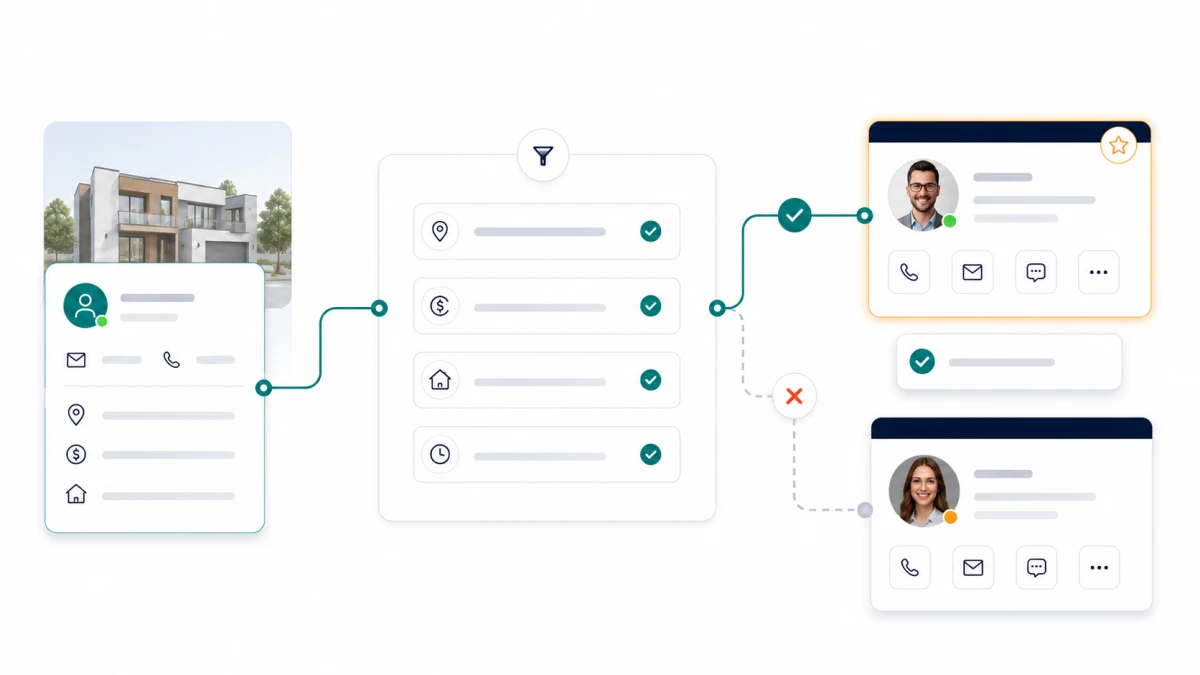
⚡ Quick answer — how should a team route leads? Start from what you are optimising for. Speed and fairness point to round robin; conversion points to fit — geography, language, specialization, price band. Most teams need a small combination: one or two match rules with a clear fallback for when nothing matches. The rule that matters most is the fallback, because a routing rule that fails silently is worse than having no rule at all.
What routing is for
Two goals, and they pull against each other.
Fast, unambiguous ownership. One named person, immediately, so nobody waits and nobody doubles up. Two agents calling the same buyer costs more than one agent calling an hour later.
The right person. The agent who knows the neighbourhood, speaks the language, has sold that building, or works that price band.
Almost every routing design is a position on that trade-off. Recognising which one you are optimising for makes the rest straightforward.
The strategies
Manual assignment
Optimises — Judgement
Costs — Depends on someone being available to decide
Round robin
Optimises — Even distribution and speed
Costs — Ignores fit entirely — the next lead goes to whoever is next
Geographic
Optimises — Local knowledge
Costs — Uneven volume; one agent gets the busy postcode
Listing agent
Optimises — Property-specific knowledge
Costs — Concentrates leads on whoever has the most inventory
Language
Optimises — Whether the conversation can happen at all
Costs — Thin coverage — one absence removes the capability
Specialization
Optimises — Credibility on condos, rural, luxury, first-time buyers
Costs — Needs someone to classify the lead before it can route
Price band
Optimises — Matching experience to transaction size
Costs — Enquiry price is a poor proxy for what someone buys
Availability
Optimises — Response time
Costs — Only as good as the calendar behind it
Workload
Optimises — Preventing overload
Costs — Penalises the agent who works leads fastest
Lead source
Optimises — Handling portal and site leads differently
Costs — Adds a rule most teams never revisit
Every strategy needs a fallback
What happens when no agent matches, or the matched agent does not respond. A rule without a fallback fails silently, and silence is the one failure nobody notices.
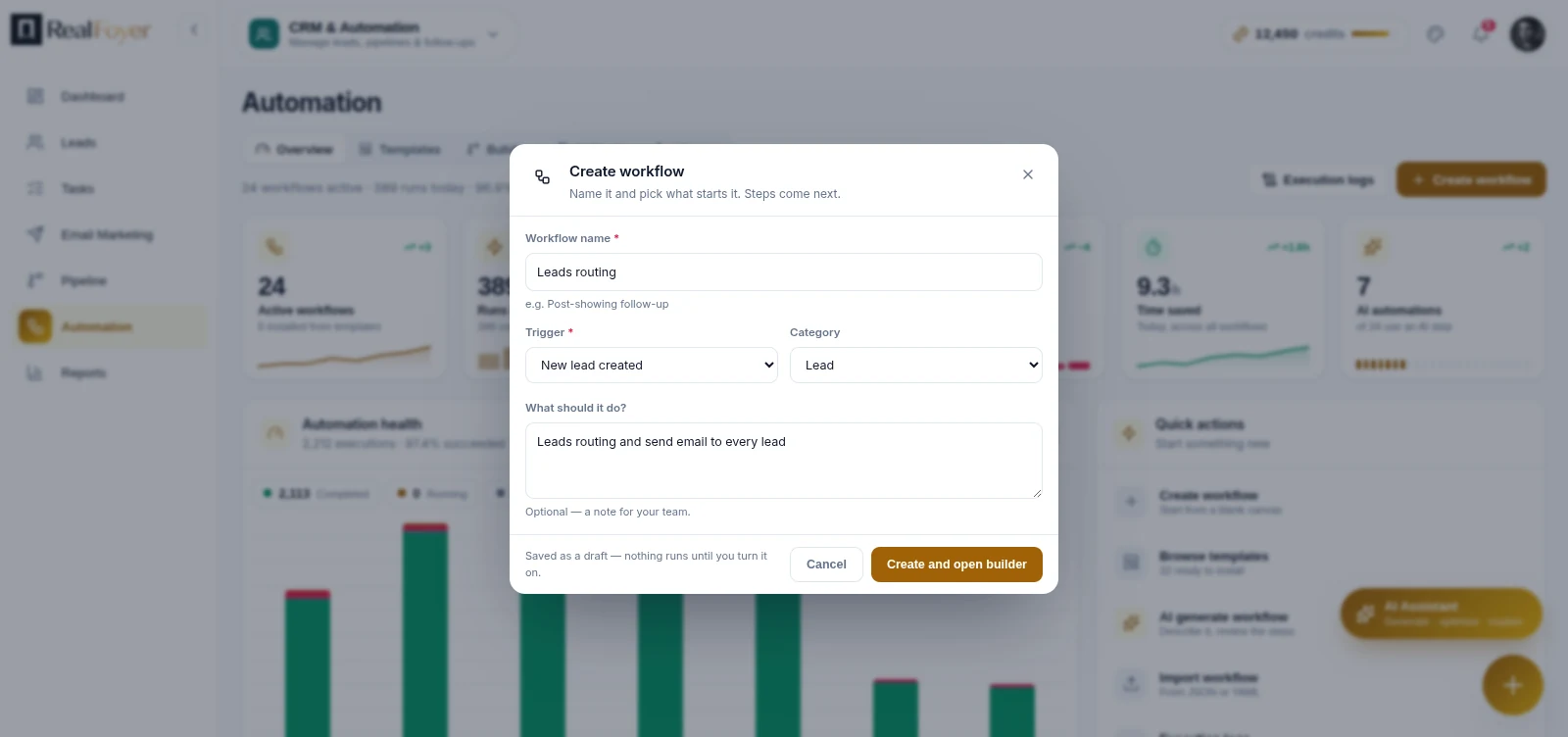
RealFoyer supports round robin, configurable routing rules, automatic fallback and reassignment, with manual assignment available when judgement should override a rule.
A few of these deserve more than a row.
Manual assignment
A person reads the lead and decides. It is the most flexible option available and the only one that notices the enquiry saying "we're relocating from Calgary in March."
It also depends on someone being available and willing to decide, promptly, every time — including at 9pm on a Sunday. Manual routing works well in small teams with a genuinely engaged lead, and degrades exactly when volume rises.
Round robin
Leads distribute in turn. Fast, obviously fair, and trivial to explain — which is why it is the most-implemented rule in the category.
The cost is that it ignores everything about the lead. It is how a French-speaking buyer in a $2M band reaches the agent whose turn it was, and how a rural enquiry reaches a downtown condo specialist. Round robin optimises for the team's sense of fairness rather than the client's experience, and those are not the same objective.
Variants soften it. Weighted round robin gives higher performers a larger share. "First to claim" posts the lead to a group and assigns it to whoever accepts — fast, but it rewards whoever is looking at their phone rather than whoever is right.
Geographic
The most intuitive and often the most effective, because local knowledge is genuinely the thing being sold.
Two practical problems. Volume is never even — one agent ends up with the busy postcode and three times the leads. And boundaries are fuzzy: enquiries arrive from people who name an area imprecisely, or who are looking across three of them.
Listing agent
The agent who listed the property takes enquiries about it. Defensible, and often what the seller expects.
It concentrates leads on whoever has the most inventory, which is usually the person with the least time. Worth pairing with an overflow rule.
Language
Less a preference than a precondition — if the conversation cannot happen, nothing else matters.
The problem is depth. Most teams have one person for a given language, so the rule works until that person is on holiday. Language routing without a fallback is the strategy most likely to strand a lead completely.
Specialization and price band
Both are attempts to match experience to the transaction: condos, rural, luxury, first-time buyers, investors.
Both depend on classifying the lead before you can route it, and at the moment of arrival you often cannot. Price band in particular is a weaker signal than it looks — the price of the listing someone enquired about is a poor predictor of what they buy.
Availability and workload
Availability routes to whoever is actually free, which optimises response time directly. It is only as good as the calendar behind it, and calendars in real estate are optimistic.
Workload caps how many active leads one agent holds. It prevents overload, and it penalises the agent who works leads fastest by giving them more of them. Use it as a ceiling, not as the primary rule.
The fallback is the important part
Every rule above has a case it does not cover. What happens then is the part teams skip.
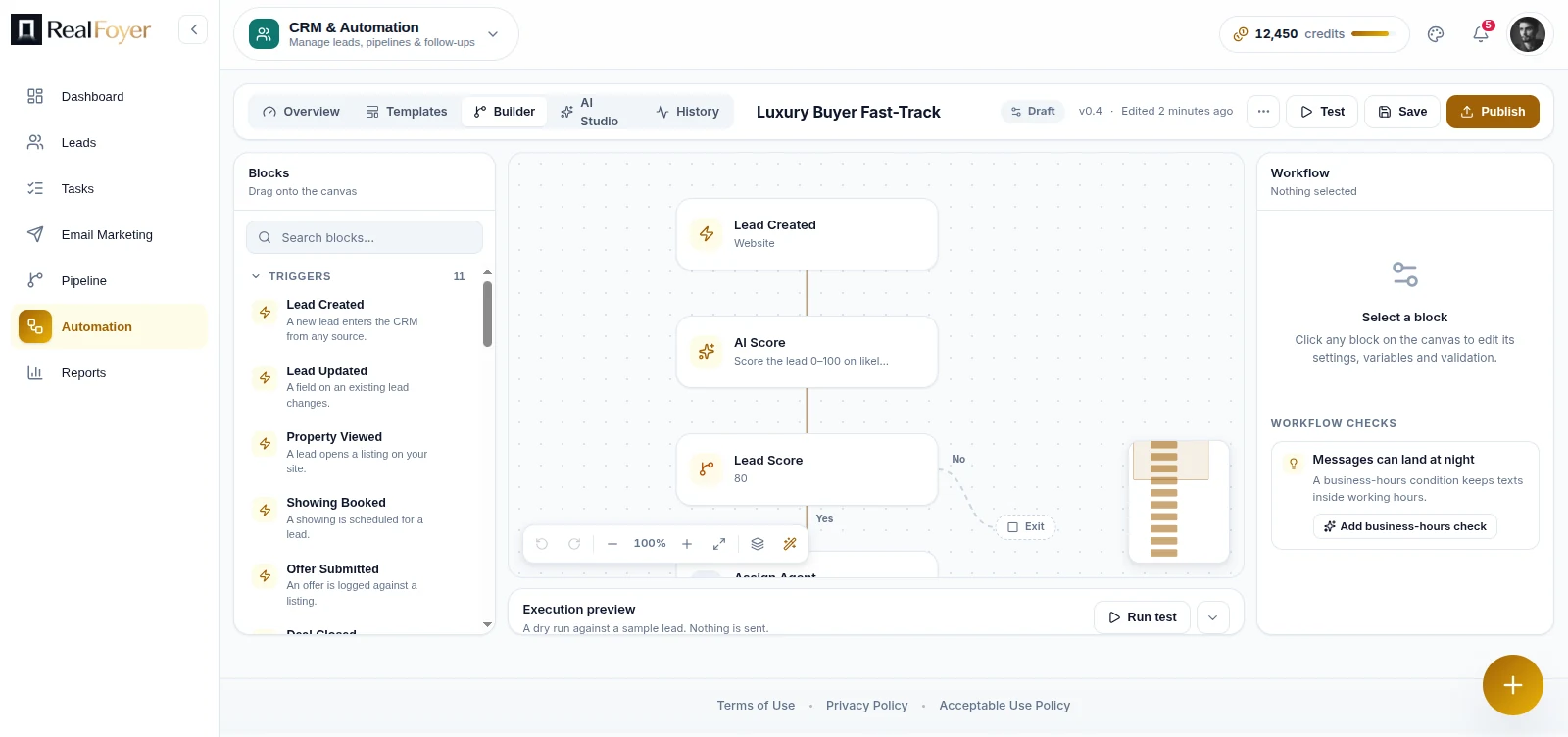
No agent matches. The rule finds nobody. Where does the lead go? "Nowhere" is the answer by default, and nowhere is invisible.
The matched agent does not respond. Assignment is not response. A lead assigned at 8:47pm to someone who is at dinner is not being handled, and nothing about the assignment says so.
The matched agent is unavailable for a week. Holiday, illness, a closing. Leads keep arriving.
The lead does not fit any category. Commercial, out of area, a question that is not really an enquiry.
The minimum viable fallback is: an unassigned lead becomes someone's problem within a stated time, and that someone is named. However you route, if there is no answer to "who notices when this goes wrong", the routing does not work — it only appears to.
The same applies to reassignment. Leads go stale, agents leave, situations change. If reassigning requires an administrator and a support ticket, it will not happen.
How to choose
Four questions, in order.
1. How many leads, and how many agents? Under a handful a day with a small team, manual assignment with a named fallback beats anything else. Rules add overhead that only pays back at volume.
2. What actually differentiates your agents? If they are genuinely interchangeable, round robin is honest and simple. If one covers the west end and one speaks Mandarin, distribution rules are throwing away your main advantage.
3. What is your evening and weekend coverage? This constrains everything. The most elegant routing rule in the world does not help if it assigns to someone who is not going to look until Monday. Speed to lead covers coverage models properly.
4. Who notices when it fails? If there is no answer, fix that before adding rules.
Most teams over-engineer this. Two match rules and a real fallback beat an eleven-branch decision tree that nobody can explain and nobody has tested.
Making it stick
Publish the rule. Agents who do not know how leads are distributed assume they are being treated unfairly, and they are usually wrong. Ambiguity here damages teams more than any particular rule does.
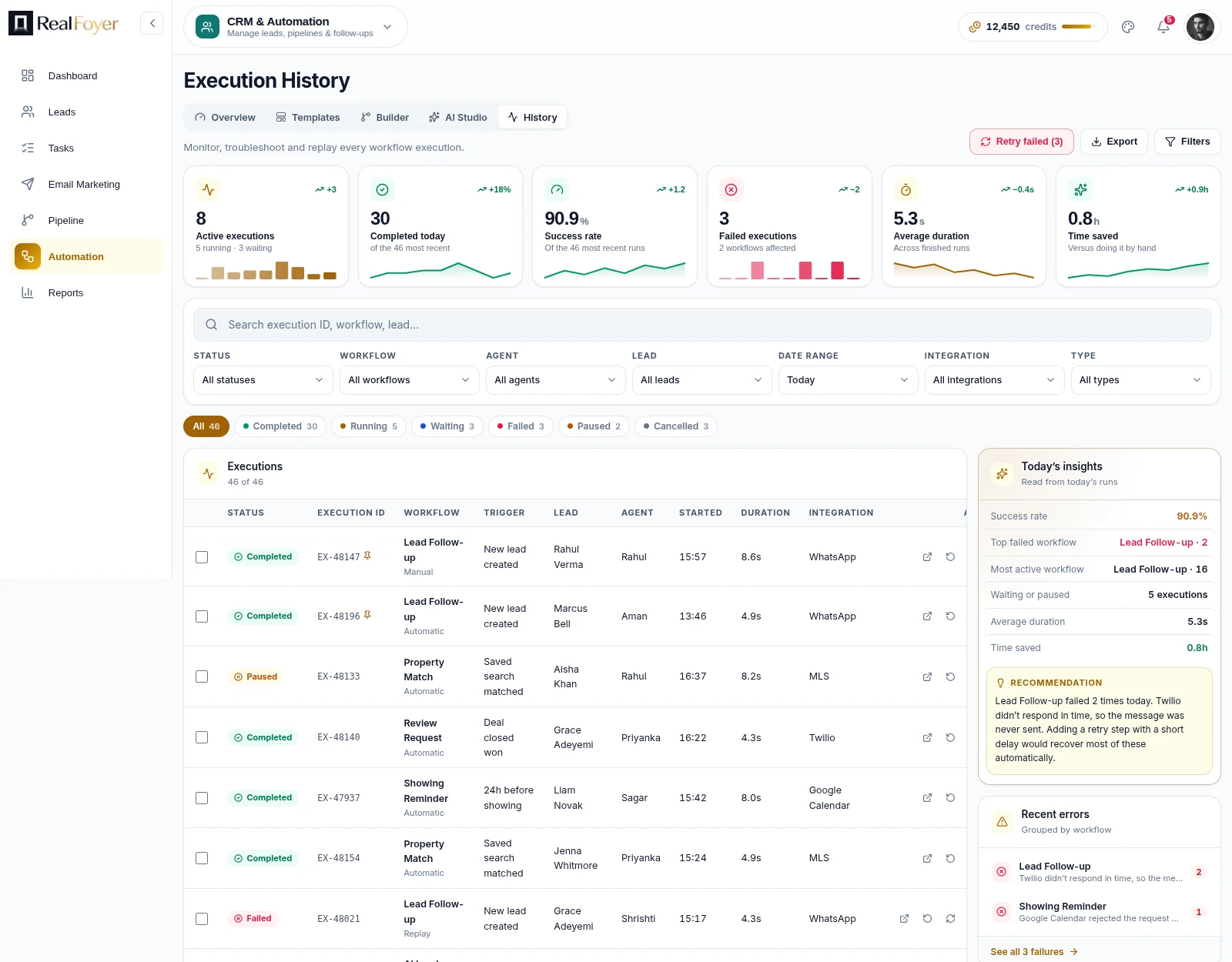
Log the assignment. Who assigned, when, to whom. Without it you cannot answer "why did I get this one" or find where leads are being dropped.
Review the distribution quarterly. Not conversion — distribution. If one agent is receiving 40% of leads, that is either intentional or a bug in your rule.
Let assignments be challenged. An agent who knows a lead is wrong for them should be able to hand it back in one step. Rules that cannot be overridden get worked around, and the workaround is leads living in someone's phone.
What to look for in lead routing tools
Most of this article is about the rule. If you are comparing software, the rule is the least differentiating part: almost every tool in the category can do round robin. The differences are in what happens around it.
One visible owner. The assigned agent shows on the lead everywhere it appears, not only in an assignment log.
An explainable assignment. Anyone can tell whether a lead was assigned manually, by which rule, or by the fallback. If the answer is "the system decided", nobody will trust the system.
A fallback that exists in the software. Unmatched leads go somewhere named. A rule with only a "yes" branch is the silent failure described above.
Reassignment that keeps the history. Moving a lead records who had it and why. Reassignment that overwrites leaves a lead without its story.
Availability handled somewhere. Either the tool can take an agent out of rotation, or the team has a stated manual way to do it. Holiday cover is not an edge case.
Context that travels. The lead arrives with the property, the search, the source and the page that produced it. Routing a name and a phone number is routing half a lead.
The log and the override, built in. The two habits from Making it stick above, logging every assignment and letting an agent hand a lead back in one step, should be features of the tool, not discipline the team has to supply.
What not to weight: the number of conditions a rule can hold. Two match rules and a real fallback beat a decision tree nobody can explain, and the tool that makes the simple version easy is the one still in use next year.
What RealFoyer supports
Precisely: RealFoyer supports round robin, configurable routing rules, automatic assignment, fallback and reassignment. A team lead can also assign a lead manually. The lead record carries website and property activity, and every assignment leaves a visible trail.
Teams can choose simple round robin or combine routing rules around the factors that matter to them, then define a fallback for unmatched or unattended leads. Automation handles speed and consistency while manual override preserves judgement.
FAQ
Is round robin bad? No. It is the right answer when your agents are genuinely interchangeable and speed matters more than fit. It is the wrong answer when it is chosen to avoid an awkward conversation about who is better at what.
Should buyer and seller leads route differently? Usually yes. Seller enquiries — valuation requests especially — often warrant your most experienced person, and they arrive at a much lower volume.
How fast should assignment happen? Immediately. Assignment is not the same as response, and there is no reason for a gap between arrival and ownership.
What should lead routing software do? Make ownership visible, explain every assignment, refuse to drop unmatched leads, keep the history when a lead moves, and carry the website context with the lead. The rule itself is the easy part.
What about leads that arrive with no information? Route them by whatever rule you use for unclassifiable leads, and make sure that rule exists. Unclassifiable is a category, not an exception.
Should agents be able to claim leads? First-to-claim is fast and rewards phone attentiveness rather than suitability. As a fallback when the assigned agent has not responded, it works well.
How do I handle an agent leaving? Have a documented reassignment path before you need it. The worst version of this is discovered three weeks later when someone asks about a lead nobody has touched.
In short
Routing is a trade-off between speed and fit, and your answer depends on whether your agents are meaningfully different from one another.
Pick the smallest set of rules that expresses that, write down what happens when they do not match, and name the person who notices when a lead is sitting unowned. The fallback is not a detail — it is the part that determines whether the system fails loudly or quietly.
See how RealFoyer CRM handles round robin, rules-based routing, automatic reassignment and manual assignment with a visible audit trail.
Related reading
- Real Estate CRM: How Agents, Teams and Brokerages Should Actually Use One
- Speed to Lead in Real Estate
- Lead Scoring for Real Estate
Research Integrity
Published 16 August 2026 and corrected 23 August 2026. RealFoyer supports round-robin distribution, configurable routing rules, automatic fallback and reassignment, plus manual assignment. No unsourced conversion or response-rate statistics are used; the trade-offs described are reasoned from how each routing strategy works.
Updated 22 September 2026 with a section on evaluating lead routing tools, added for the commercial phrasing that reaches the lead automation product page. No vendor is named or compared, and the description of what RealFoyer supports is unchanged from the 23 August correction.